Yellow water filled the ditches by the roadside. Yellow clouds drifted lazily through tranquil webs of darkness and obscured far, glimmering stars. Horror and misery stared out of sodden eyes, and the night was filled with voices. Men with packs made vivid, grotesque gestures against the yellow sky and swore in their beards. Men ambled over stony paths and climbed hills and passed with disgust through shadowy orchards and gray, deserted vineyards.
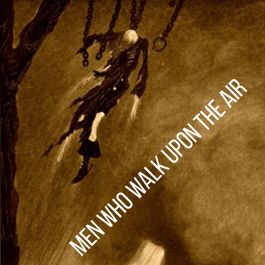
Prangois Villon fingered his stained cowl and sighed. The thing above his head moaned and gibbered in the wind and occasionally the chains up on its poor, maimed wrists and ankles clinked like jolly glasses raised to toast a well-fed abbot or a stout, beneficent knight. The night wind whistled through its flailing garments as it swung pathetically to and fro, and Villon pitied it.
Villon pitied all outcast, shameful things. Ho had wasted his lean years in an orgy of pity and exaltation and song. Unfortunately he had lost his teeth and he had no hair to warm his chastened head; but still he pitied. Through the vineyards of Picardy he
strolled in his splendid misery and shame, and he stopped and wept when he met men who could no longer ex¬ change happy memories, or slap unresisting backs or laugh over deliciously calculated jests. High up in the cool, damp air they swung—and no one ever spoke to them.
Villon wiped the comers of his shapeless, dissipated mouth and stared indignantly at the yellow sky. The feet of the thing on the gibbet swept rapidly across his world of clouds and owls and trees and made no sound under the stars. Then the chains clinked out a curt command and the gibbet held itself erect and replied with a barbaric rattle. Villon knew that on still, cold nights gibbets become restless and chafe under their heavy burdens and move about, seeking warmth and companionship. They have been known to stroll at midnight through lonely vineyards; and legends of walking gibbets were rife in Picardy. Villon coughed and shivered, and suddenly he thought: “It is very cold, and that poor man has no covering for his feet!”
Something fumbled nervously with the edge of his ragged cowl. He turned and stared into inconceivable blue eyes wide with horror. The eyes were mild and soft, and tears had gathered in the corners of them.
“A wonderful profile,” thought Villon. “Beautifully proportioned, too. And hair like fields of waving summer com, and Flora or Archipiade or Heloisa did not possess such
While he reflected thus she took him by the hand and dragged him ruthlessly across the road. “I have a favor of great magnitude to beg of you,” she said.
Villon scowled, but he was secretly elated, and he observed how gracefully the small yellow curls clung to the nape of her neck and how buoyantly she held herself as she walked over the hard, frozen ground. He followed her indoors, and watched her spread a table and make a fire. Then she turned to him. Pity and. misery and terror looked together at him out of her vividly unconventional eyes.
“He is my husband, and there is no one else to whom I can appeal. Of course you will get him down. I ask only that. I want yon to climb up and cut him down. It will be difficult, of course, with the wind whistling about your ears, and the horrible birds—” she blushed and dropped her eyes.
Villon nodded. “I understand,” he said. “And as you suggest, it will be exceedingly disagreeable. But when I think of his poor, frozen feet I am prepared to sacrifice both my comfort and peace of mind!”
“And I shall give you a good dinner,” she added shyly, feeling per¬ haps that she owed him some induce-
“Very well,” said Villon, “I shall do it!” It had not occurred to Villon that she might invite him to dinner. Now that he thought of it, he was atrociously hungry. For three days he had tramped through the vineyards, scribbling ballads to Guenevere the mythical and Guillemette the upholstress and Jenny the
hatter, and to his cronies Master Jehan Cornu and the Seigneur de Grigny, to notaries and abbesses and to Merlin, but nought to whet his appetite had he derived therefrom, and he had munched disconsolately at insufficient cheese and tasted of immature wine, and once he had crawled on his hands and knees to a pool by the roadside to cool his thirst with water that stank. It would be good to sit at a merry provincial board, and with such a companion the time would pass right jollily.
“Sit by the fire,” she commanded, “while I cook the meat. Do you like rice and sugar? And would you care for some champagne of the vintage of 1216?”
“I am not at all difficult to please, ’ ’ said Villon, as he slid into a chair and removed his boots.
The fire was warm and luxurious.
Villon spread out his feet and warmed his great, cumbersome toes by shoving them into the glowing coals and withdrawing them before the heat, could painfully or seriously blister them. Then he stretched his fingers above the coals and whistled a Parisian tune.
The wife of the man on the gibbet unwrapped a dozen white loaves, and heated some broth in a bronze kettle and rolled several small casks of wine into the center of the room. The table was spread with embroidered yellow linen, filigreed on the edges with designs of falcons and hydra-headed dogs wrought in gold and silver wire. Upon the gorgeous cloth she laid large wooden spoons, copper cups and knives and tiny containers replete with various seasoning: vermilion pepper, spice, oil of cloves, nutmeg.
The dinner heralded itself by enticing and glorious odors. Villon sat up, and drew into his nostrils the rich variegated smells of roast geese, fried snails, and scrambled ostrich eggs. Villon displayed upon the whole an admirable restraint. Only once did he lose countenance. A loud hissing sound arose from behind his chair, and Villon shook like an aspen-leaf in an October gale. “ What is that 5 ” he demanded, considerably put out.
“Only mussels from Marseilles. I am putting them into hot water. Don’t you like them?”
Villon sighed and relaxed. The fire became less hot, and he permitted his toes the luxury of a longer interval of repose between the blinking coals.
He was fairly famished, and when she invited him to the board he fell to with relish. He ate furiously, immoderately, and with passion. He swallowed, stuffed and crammed. He discarded spoons and knives, and took between his soiled fingers great chunks of firm, white meat. His manners were deplorable, but his enthusiasm deserved commendation.
“Now,” she said, when he had finished, “you must go out and cut him down. I ask only that. It is so cold that his feet will freeze!”
But Villon had forgotten the man upon the gibbet. His hostess was charming. Theoretically, he had noticed it before, but he suddenly dis¬ covered that she was made of flesh and blood. And the champagne had unfortunately gone to his head.
“Perhaps you do not know that I am a poet,” said Villon, holding on to his chair for support.
“I should never have guessed it!”
“But I am, really. And in Paris I am famous, in spite of—er—an unfortunate accident.”
“An accident?”
“I killed a booby. But it doesn’t really matter. And I’m a master of arts at the University of Paris, and I belong by birth to an exceedingly aristocratic family.”
“But that has nothing to do with my husband, whose feet will surely freeze if you do not go out and cut him down.”
“Naturally. But it is not pleasant to go out in the cold, with the wind whistling about your ears, and the
“What more do you wish?”
“Well, you might spare me one little kiss. No one would ever know. Your husband is scarcely in a position to care, and a kiss is never taken seriously outside of Paris.”
Villon’s hostess seemed a little angry, and her eyes narrowed dangerously. Villon preferred this, since he disliked both high-pitched and docile women. The quiet, angry variety pleased him.
He knew that his proposal was odious to her, but he reflected that a hopeless desire frankly expressed was better than innumerable beatings about the bush. She might refuse his request, but he would not have failed through a cowardly reticence. The thought of his courage nerved him, and he released his hold upon the chair. Then he discovered that he was hopelessly drunk. He seemed so pitiful as he swung back and forth above the table, with his crimson cowl rent in twain and covered with stains, that his considerate and adorable hostess could not contemplate him with anger.
“If I kiss you just once,” she asked, “will you go out and cut him
Villon nodded dejectedly, and con¬ fessed that he would do anything within reason to please her.
“Very well,” she said, “you may kiss me.”
Villon wondered if perchance he had fallen asleep, and he tweaked his nose to assure himself that he did not dream. He had scarcely expected a victory so complete. It seemed unreasonable. Nevertheless, he prepared to take advantage of the opportunity offered him. He smoothed his mustache, and endeavored to cover up the rents in his cowl. “So rapid a con-quest is really very flattering,” he reflected.
She stood in the center of the room, and she did not move away when he came up to her and took her into his arms. “Remember,” she said, “you are only to kiss me once! ’ ’
Villon nodded, and sighed. “That is a misfortune!” he said, and kissed her with delectable impudence. She made no attempt to push him away, and he kissed her eyes, and her hair. Then he quailed and released her. Something horrible had taken place in the soul of the woman before him. The skin on her face had gone suddenly bloodless, and her eyes did not blink at him, but simply stared. Her mouth hung agape, and her shoulders rose up until her head seemed lost between them. She threw out her arms, as if warding off some unthinkable spiritual presence, and retreated toward the comer of the room.
Villon stepped forward, and then, all at once, a sense of profound physical fatigue overwhelmed him. He stood .horribly still in the center of the room, and gazed at his hostess reproachfully as shriek after shriek came from between her colorless lips.
“He’s at the window!” she screamed. “Don’t you see him? And he’s holding up his poor frozen hands, and little streams of blood are running out of his eyes down his frozen cheeks! He saw you kiss me, and now he’s come—he’s come!”
Villon turned slowly and gazed stupidly at the window. It was a small, diamond-paned window set high up in the wall, and Villon saw nothing but darkness, and vague, disturbing shadows that occasionally passed to and fro in back of the shimmering blue glass. “You are very idiotic,” said Villon, “to dis¬ turb yourself over shadows!”
He knew that women often behaved unaccountably, but he could
not explain the change in the woman in the comer. A moment before she had been in his arms, and had not objected to his innumerable caresses; but now she lay huddled in the corner, shivering and wailing, which put quite a different complexion upon the affair. “One never knows,” thought Villon, “what they will take it into their heads to think or do!”
Villon wished that he had not accepted the invitation of his erratic hostess, and he cast anxious glances toward the door. The words that came from between her lips did not carry moral conviction, and Villon preferred not to test her allegations in the light of reason. He preferred to ignore them, which was wise.
But he was really quaking from toe to chin, and when he heard a voice without calling him loudly and urgently by name he sought to establish friendly relations with the woman in the corner. She might, conceivably, be able to intercede for him. “You know that my intentions were honor¬ able,” he said, and this might have led to further talk and discussion, but someone pounded heavily upon the
“Don’t let him in!” shrieked the woman in the comer, and tears ran down her sallow face, and her wide, unblinking blue eyes glittered with unspeakable terror. Villon’s actions failed to reassure her, and when she had exhausted a repertoire of conventional emotions she collapsed in a heap upon the floor.
Villon devoted his entire attention to the door. It was an enormous door, fashioned of stout oak, and it was heavily studded with great bronze nails, and it might have resisted Satan; but Villon felt that the bolt was feeble, and the suspense was killing him. The door bulged inward and shook visibly, and Villon re¬ solved to seize the occasion by its tail. He stepped quickly to the door and unbolted it. A gust of wind swept into the room and whistled up the chimney.
And there in the doorway stood what Villon had feared. It had come down from the gibbet and it stood trembling with wrath, and waving its blood-clotted, skeleton arms against a glimmering square of yellow sky.
F or a moment it wavered uncertainly in the doorway, and then it raised its right foot, and stepped over the sill and into the room. The chains on its wrists and ankles clanked as it advanced leeringly over the smooth floor. Its hollow eyes glittered, and phosphorescently illumed a face that was eaten away at the corners. Its mouth gaped, and a portion of the lower jaw had fallen away, and its teeth projected through a surface layer of mottled and striated and nauseously flabby skin. Villon screamed when he saw its flaring eyes, and the tiny rivulets of blood that oozed from beneath its lids and ran out of the corners of its poor mouth. He covered his eyes with his hands, and endeavored to shut out the noisome sight; but the thing from the gibbet was a screeching reality, and Villon was so intent upon trying to turn it into the stuff of dreams that he aided his imagination to his own hurt. He saw it imaginatively, which was imprudent. He was probably un¬ able to seize upon any straw that might have saved him, and he got to explaining the situation in a manner that was ridiculously trite. It was the champagne, he told himself, and he assured himself that the best thing he could do would be to ignore the thing that had come down from the gibbet.
Perhaps that is the reason why he stood still and did nothing when the thing came up to him and breathed heavily into his pinched, frightened face. But the thing was quite blind, in spite of its coruscating eyes, and it somehow failed to get wind of Villon,
and it stood shivering and moaning and showing all of its yellow teeth, and Villon was conspicuously upset.
Villon stared frowningly for a moment, and thought how much the thing reminded him of the woman in the corner. Married women, thought Villon, noticeably resemble their husbands. For himself he began to wonder why he had ever desired to kiss her. He had, for no definite reason, impaired his dignity. He was so deeply moved when he thought of his humiliation that he entirely forgot the insane, hybrid creature that had stumbled into the room. He could not help feeling that the cards were against him. His several fates had played him a scurvy trick, had rubbed it in disconcertingly thick. With something like a grimace he sat down upon the floor.
The thing went tearing past him and collided against the opposite wall. It collapsed with a terrific rattle, and lay still for a few seconds, breathing heavily. Then it got awkwardly to its feet, and prepared to search the room. It made a disastrous circuit of the walls, groping blindly. It could not speak, but it hissed and whistled, and Villon was sorry, for in spite of his affected indifference he strenuously objected to half-articulate vituperation. The thing was facetiously cursing him and Villon’s spleen rose eloquently. He got to his feet, and stepped forward, and affirmed to the creature’s face that while he conceded its hallucinatory nature he was ill-prepared to overlook even imaginary insults. But the thing continued to search the room, and finally it stumbled upon the woman in the comer.
It bent, evidently in a state of pro¬ found agitation, and its thin, bony fingers fastened upon the woman’s left wrist. Then it drew itself erect, and started across the floor, dragging the woman brutally with it. Villon’s drunken and speculative anger was succeeded by white-hot terror. But he valiantly endeavored to intercept the thing he could not subdue.
Unfortunately the initiative dis¬ played by Villon proved curiously worthless. When he stood in the creature’s path and endeavored to wave it back it simply spat at him, and then it extended a long, bony arm and struck him across the face with the flat of its hand. Villon reeled back, and the knowledge that he had deserved the blow sobered him. He made no further attempt to retard the creature’s progress, and he did not even object when the thing from the gibbet pummeled the woman from the corner until she awoke and screamed—and screamed He did nothing when the loathsome thing re¬ leased its grip upon the woman’s arm and seized upon her long, yellow hair. And when it dragged her out through the door into a night of clouds and owls and trees, Villon simply stared and groaned and fell back against the
Later on he found his way out into the cool night, and discovered to his delight that every little wind awoke and sang. Owls were hooting on the twisted, cankerous arms of hopelessly distorted trees and the boles of the great oaks resembled men walking. The night was filled with futile whispering, and men swore roundly, and ambled through gray orchards and lonely vineyards.
Villon fingered Ins stained cowl and sighed. Above his head two gray, amorphous forms swung merrily in the night wind. The wind tore through their fluffing garments, and they made no sound under the stars. Only the chains clanked on their poor, maimed wrists and ankles, and Villon noticed that one figure held the other closely.
He turned on his heels and walked in the opposite direction. “The pity of it!” he murmured. “Oh, the pity of it!”

