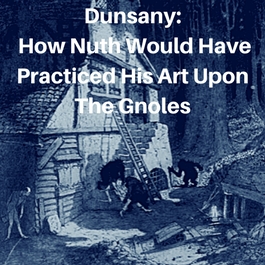
Dunsany: How Nuth would have practiced his art upon the gnoles
Let’s just jump into it: Despite the advertisements of rival firms, it is probable that every tradesman knows that nobody in business at the present time has a position equal to that of Mr. Nuth. To those outside the magic circle of business, his name is scarcely known; he does not need to advertise,…
Read MoreThe Cornwall working page (not yet complete)
Cornwall notes: Fallen covenants
In Heirs to Merlin there are two fallen covenants. Stellasper This one is is Scilly. I suppose I should have looked up more Sicily folklore before I wrote this. Stellasper was a Criamon covenant founded in 1025, and everyone vanished in 1163. The name means “through the stars” or possibly “during the stars”. I presume it’s an…
Read More
Cornwall: Scilly Islands
I’ve been having trouble getting material on Scilly: enough to go forward, but I’ve written to various people for help finding folklore. Let’s begin. The capital of Scilly in the 20th Century is St Mary’s, but in the C13th, it’s what’s now called “Old Town”. In period I think it’s called Ennor (although that could…
Read MoreCornwall: Castles – further notes
Note on nobility. At the end of the C12th, there were three baronies in Cornwall, Launceston, Cardinham and Trematon. Launceston merges with the Duchy when Richard of the Romans takes it over. The previous holder of both titles having died without heirs in 1175, the land returned to the Crown, so that Henry III could…
Read More
Cornwall: Carew’s itinerary 3
Tenancy Carew notes that commonly 30 acres make a farthing, 9 farthings make a Cornish acre. 4 Cornish acres are a knight’s fee. Most tenants are required to pay “due capons” which are probably head taxes, not actually capons. make harvest journeys grind at the mill sue at the court discharge the duties of reeve…
Read More
Cornwall: Carew’s Itinerary 2
Living things in Cornwall Herbs: Cornwall has a vast amount of Seaholm and Sampire. Seaholm is candied or made into a syrup. It’s a restorative. Rofa folis? Also has Hyssop, sage, pelamountayne, marjorum, and rosemary. Few Cornish people farm, comparatively: food is imported from Devon and Somerset. Wild fruits include “whurts, strawberries, and raspies.” Orchards provide…
Read MoreNotes from Medieval Cornwall by Elliott-Binns
We are almost done with the research phase. After this I want to go through Carew’s 1605 Guide to Cornwall. There is also a book of Scillion folklore. I’m getting to the futility point, though; my sources are quoting either each other or Carew. After that, it’s collating, making plot hooks explicit, and getting art…
Read More
Cornwall: Carew’s Survey 1
Carew’s Survey of Cornwall is an interesting little book, filled with useful material and much quoted by my more modern sources. It was written in 1605, and the version I’m using, which is copied from Internet Archive, has the linguistic quirks of the time. It uses the f for long s, and has the letters…
Read More