Well, for my parts, anyway. Afanc egg seller songAside from “Who will buy?” from the musical Oliver! which owes a bit to Cherry Ripe by Robert Herrick, this ditty goes back to the histories of London street cries. The earliest one recorded is in a poem called The London Lickpenny by John Lydgate. I also…
Read More
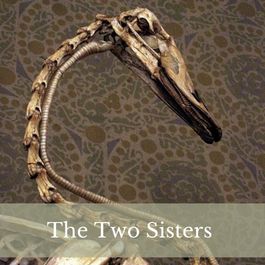
The Two Sisters – A tale of murder and haunting
Although it is disguised a little with variants, the creature called Eala in the Magonomia Bestiary is the haunted harp found in one of the most popular folksongs of the British Isles. To keep things English, which was the remit of the book, I deliberately used a variant from Berwickshire, but we can look at…
Read MoreWhere did you get your ideas?
It’s the basic question everyone asks, so here are my answers for this project. Afanc egg seller songAside from “Who will buy?” from the musical Oliver! which owes a bit to Cherry Ripe by Robert Herrick, this ditty goes back to the histories of London street cries. The earliest one recorded is in a poem called The London Lickpenny by John…
Read More
The Demons of the Hooting Cairn
Kenidjack, the demon who oversees the wrestling in Cornwall, has been briefly mentioned on the blog before, as a minor character in some Ars Magica material, but here’s his complete story from Hunt’s “Popular Romances of the West of England”. It starts with a quotation from an older work, where our fellow is mentioned, in…
Read More
A second thought on Urban Wisps
This is a short piece, compared to some of the others for the Bestiary series. My goals for the wisps were straightforward, so I got there without a lot of surplus material. When I wrote the urban wisps for the Magonomia Bestiary I wanted to introduce the Royal Exchange and suggest that the creatures were…
Read More
Malkins
Malkins appear in a variety of books in the period. I took the name from the cat familiar in a play called “The Witch” by Thomas Middleton. “Malkin” is a period diminutive of the name “Maud” or “Matilda”, popular for cats. Middleton notes the play was “ill-fated” and that was thought for some time to…
Read More
Grim, King of the Ghosts
In the Magonomia bestiary I’ve introduced you to Grim, the Ghost King, so in this episode I’d like to give you the source documents and illustrations which led to his inclusion. I’m not a singer myself, so here are three versions of the song he appears in. I’d note each varies the title a little.…
Read More
The Laidly Worm of Spindlestone Heugh
Now that Andrew has mentioned the Laidly Toad, and shared some art from the forthcoming bestiary, I can talk about the folklore used to design it. The Laidly Toad is the villain from “The Laidly Worm of Spindlestone Heugh” which is a story from the English Borders. I’ve also mixed in a little from a…
Read More
Cellini swears his statue of Mars is not haunted
A brief one for this week. See you next week, when things get way too intense for Magonomia Bestiary. *** Being then refreshed in strength and spirits, I attacked the great statue of Mars, which I had set up solidly upon a frame of well-connected woodwork. Over this there lay a crust of plaster, about…
Read More
Cellini crosses the king’s official mistress
Madame d’Etampes is mentioned several times in Cellini’s stories, but I’ve cut all of them but this one out. This is Anne de Pisseleu d’Heilly, Duchess of D’etampes and the chief mistress of King Francis I. She loathes Cellini, because he isn’t sufficiently humble in her presence. He’s a misogynist, so he dislikes her for…
Read More