Ars Magica Open License
There has been a flurry of activity in the Ars Magica fandom. A new Open License has allowed us to create a plethora of material. My contributions so far are:
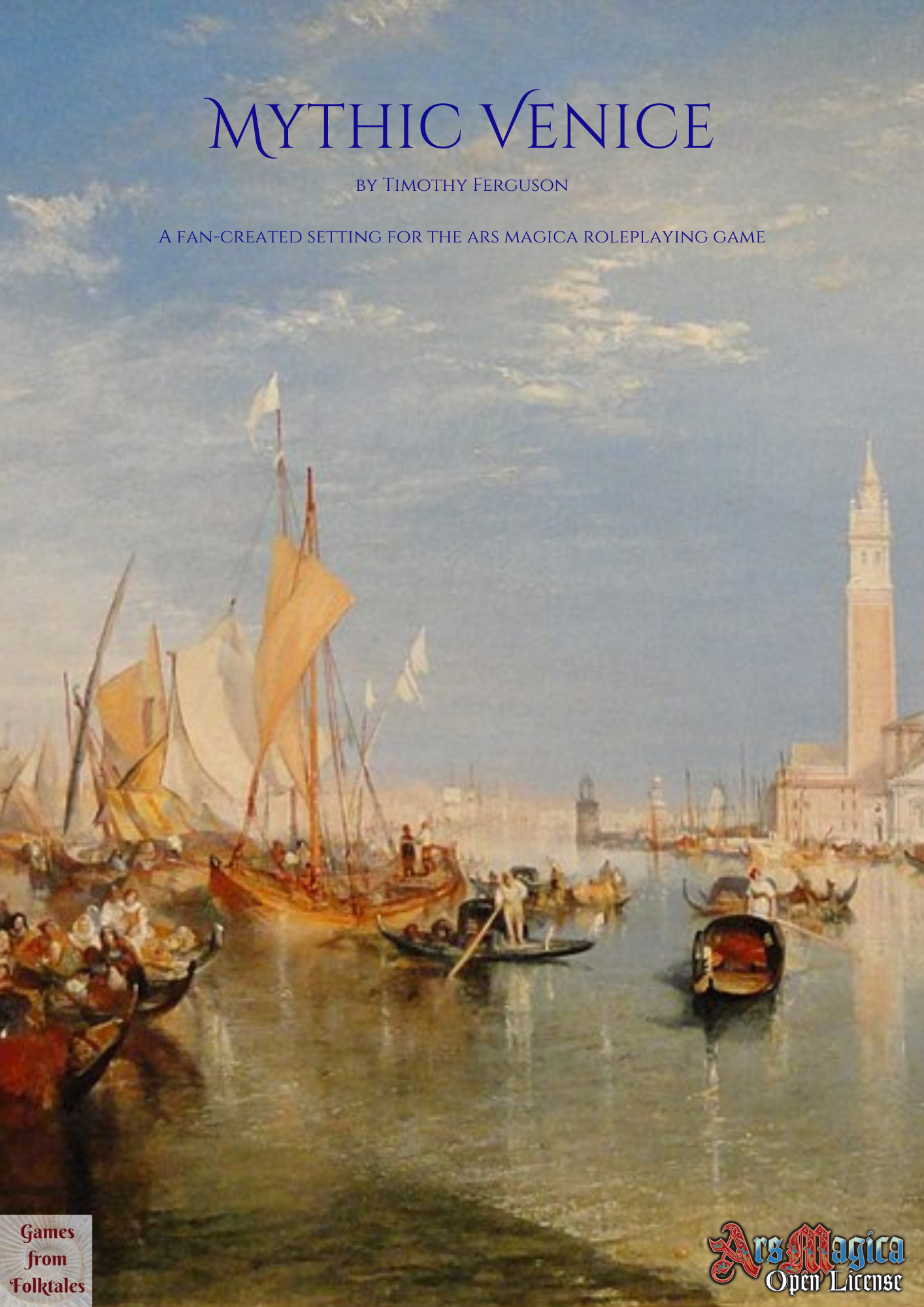
This” pay what you want” e-book is available through several vendors.
DriveThru RPG has an affiliate program so I’m paid a small fee if you follow the link and purchase anything.
Itch.io
Patreon doesn’t allow Pay What You Want pricing, so it’s 5USD. Alternatively, it’s available free with a paid Patreon membership.
If you’d prefer a tangible copy, in paperback or hardback, Mythic Venice can be ordered via Lulu Publishing.
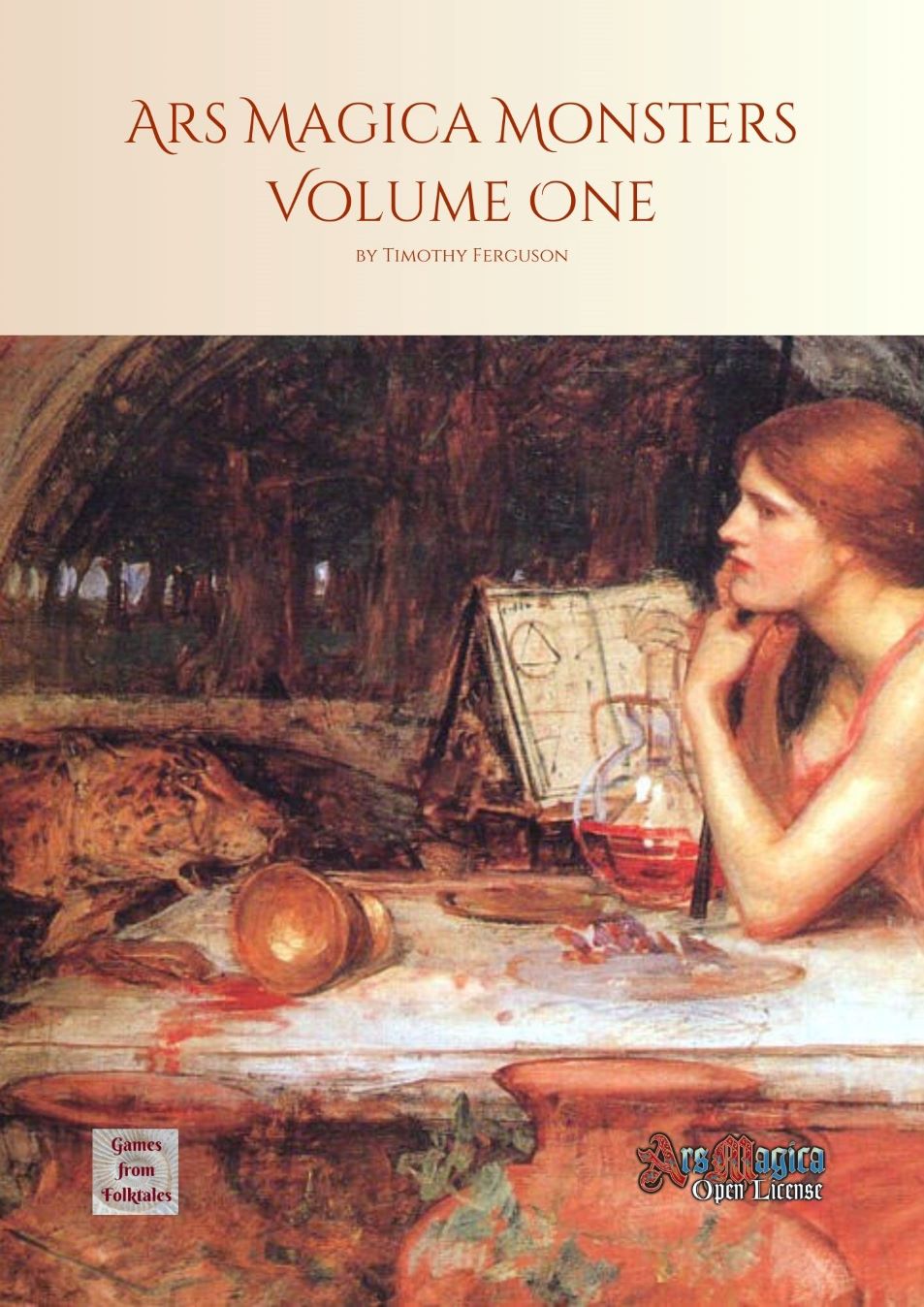
I reissued 100 of the monsters developed for my blog, so that other authors could use them under the Atlas Games Open License. My Patreons convinced me to upgrade the pdf into a full e-book. It has been expanded with contextual quotes from the public domain literature I used to source the monsters and public domain art.
Currently it can be accessed on the Games From Folktales Patreon, where this book is available for no cost with a free membership. It’s also on DriveThru or itch.io, where it is “pay what you want”. These are affiliate links.
I’d also like to note the Ars Magica 5th edition creature index. This is just a listing of all of the creatures with Might in the Core 40 books. It’s a free work tool for others wanting to play in the Open License.
Ars Magica direct permission
Atlas Games allowed me to create a great deal of material through personal permission, granted outside the Open License. Over time much of this material will be reused in ways which bring it into the Share-Alike pool. For example many of the monsters in Volume One, above, are reused from material below.
Mythic Cornwall
The Cornwall Gazetter / Mr Ferguson’s Cornwall is a free 156 page pdf designed to work together with Heirs to Merlin (the official book for England) and with the Vanilla Covenant, a fan book set in the Bristol Channel.
The Vanilla Covenant
The Vanilla Covenant: A group of Ars Magica fans wanted an alternative to the official Living Covenant, so we built one. It’s 56 pages, free , and suited for new players.
Games From Folktales Transcripts
These transcripts of the podcast. They are free downloads, but if you think the podcast has merit, please consider joining the Patreon.
2024
January – March 2024
April – June 2024
July – December 2024
2023
January – March 2023
April – June 2023
July – December 2023
2022
January – March 2022
April – July 2022
August – October 2022
October – December 2022
Magonomia Bestiary Special 2022
Earlier annuals
2021 Annual
2020 Annual
2019 Annual
2018 Annual
2017 Annual
2016 Annual
Magonomia
I’ve contributed to two books for Magonomia: The Roleplaying Game of Renaissance Wizardry.
The core rules and Bestiary of Enchanted England are available from Shewstone Publishing via DriveThru RPG. Please be aware those are affiliate links. Also, I get royalties on the core rules.
Doctor Who
I branched out for a minute to write one section of a Doctor Who: All of Time and Space. (affiliate).

Fifth Edition Ars Magica
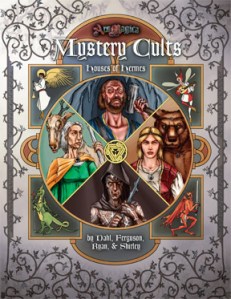
I’ve had the good fortune to co-author twenty-seven roleplaying supplements for Atlas Games. Atlas doesn’t sell books directly from their website, so purchasers should consult their friendly neighbourhood game store, Warehouse 23, or an online retailer like DriveThru
 |
 |
 |
 |
 |
 |
 |
 |
 |
 |
 |
 |
 |
 |
 |
 |
 |
 |
 |
 |
 |
 |
 |
 |
Earlier work
 |
 |
 |
Magazine Articles
A quick list of the magazine articles I’ve been paid for.
Sub Rosa
This magazine is still published, in pdf format.
Issue #5: Beyond the Fields We Know
When I’d finished writing my piece of Realms of Power: Faerie, I was left with a half dozen faeries which had been trimmed for space. I offered to allow each subscriber to Sub Rosa to select a single faerie for me to write up, an offer which still stands and which I’m still working through. I had hoped that some of the readers would choose a faerie I’d already designed, but that hasn’t happened. 8)
The title of the column is an homage to Lord Dunsany.
Issue #2: The Path of the Circle
In Houses of Hermes : Mystery Cults, the Criamon magicians are described as following different paths, based on a mixture of Empedoclean philosophy and Greco-Buddhism. I cut one of the schools of thought from the book for length, and because it tended to demonstrate that Criamon’s beliefs were right. This is a problem because in Ars Magica’s core setting, monotheists are basically right, and there’s no real value in revisiting the metaphysics in a little sidebar in a supplement.
Hermes Portal
This magazine is no longer published, but all of its articles are now available for direct download as .pdf from its web site.
Issues #10 and #11 : The China articles (Stories in the Chinese Style, Mythic Cathay: Chinese External Alchemy, Mythic Cathay: Buddhism, Mythic Cathay: Mythic Cathay: Popular Beliefs, The Meta-Bestiary, Mythic Cathay: Taoism)
A group of Ars Magica authors began to write a Chinese regional guide, but the project fell through for various reasons. Whenever I say this, I like to make it clear that it wasn’t some sort of acrimonious thing between the authors. The other two just had live events that got in the way, and this was a sort of on-spec project, since China is outside the scope of Ars Magica’s Mythic European setting. I’d written about 20 000 words (as I recall, dimly) when the project fell through, so my chapters were recycled as magazine articles.
In the time since, Ars Magica readers have suggested that we should try to write Indian of Chinese supplements. I reply that it’s incredibly difficult to do well, and very easy to do badly, for several reasons.
China is so physically massive that it makes Europe seem like a little promontory. In the past we’ve written whole chapters about tiny islands, and whole books about regions the size of Normandy. To write up China in a book of standard length would require a level of abstraction that loses much of the local flavour of each place. You could get around that by doing, say, a Xian city guide, but when people ask for Chinese Ars, that’s not what they are wanting. 8)
Chinese spirits are so numerous that a bestiary for them is impossible. On top of this, there is the stylistic question of if people are comfortable with magi killing gods that people worship in the real world, so they can suck out their magical essence. It’s all very well having magic slap now Chernobog or Huldra, but is it tacky to kill and loot the corpse of the Monkey King?
A third problem is that Chinese magic is not about doing whatever you like. It has strong moral overtones. At the time we were writing, we didn’t have a good mechanism for modelling mystery cults. Even now, though I’m not sure that magic similar to that found in Chinese folklore is what people want. The Criamon write-up on House of Hermes : Mystery Cults was unpopular with some people because it forced magi designed using it to follow a pseudo-religious philosophy. Many Chinese magical practices are based on some sort of gift from a god or spirit. The spirit can take back its powers at any time: magi are not free agents. That makes it a hard sell.
The key books for my sections of this were Taoist Meditations a book by a French female academic the full bibliography of which I have misplaced, Journey to the West, by Li Cheng en, and Chinese Gods, which again seems to have hidden itself in my bookshelves.
I also used the Li-jen story, about Roman prisoners sent to China, where they founded a city. I read it originally in a book called Black Horse Odyssey by David Harris. I think the Li-Jen story has a lot of potential for Ars Magica sagas, and its my prefered origin for Trianoma.
Issue #8: The Martyrdom of Issidoros.
This article was about mastic, the chewing gum of Mythic Europe. It had to be pulled from a supplement because I couldn’t get chewing gum past my editor. 8)
Issues #4 and #5 Stories for Elder Magi
This was an article about setting-changing issues, designed to challenge experienced characters. The current edition of Ars Magica accepts high-fantasy stories more easily than other versions, and so I’ve reused several of these ideas.
The idea for a plague that kills off magicians is based on Clark Ashton Smith’s Silver Death, from The Island of the Torturers.
Issue #4: Hermetic Information Storage and Flow
I’m a librarian, and this was my first attempt to look at how magi might use their powers to alter their libraries. Much of this was recycled for Covenants, but like Covenants, it pulls its punches a lot. There are thing s a librarian would do, had he or she magic, that change the ways that libraries look, and I didn’t try to force those in here. See the Covenants page for more information.
Like much of modern librarianship, the definitions it uses come from a poem by TS Eliot.
Issue #3: Why Don’t Bjornaer Magi Bind Familiars?
There are a dozen or so stories in this which emerge from the players investigating the flaw in Bjornaer magic. In House of Hermes : Mystery Cults, a new and definitive reason is given, so this is superceded, but still, it may contain some play ideas.
Issue #1 and #2: Forever trilogy
(Prelude to Forever, Continuing Forever, Ever After?)
These were a writing challenge I set myself, introducing what were then new ideas in the published stories for Ars Magica. Things like romantic interests, forced narrative, huge gaps in time between stories, flash forwards, really weird cosmologies due to Criamon magical failures, and so on. It’s also written in a very direct “tool kit” style, rather than the more D&D like location guidebook style, which was and remains popular.
The game the children play to call each other is traditional, but I became aware of it based on a scene in a vampire novel called The Journal of Edwin Underhill by Peter Tonkin.
Pyramid Magazine
March 23, 2001: Better Than Him, Worthy of You.
In the original story of Pinocchio, the puppet is a really rotten child, and he leaves misery in his wake. In the story above, I had his sister come looking for vengeance. I had the idea for the story while listening to a track by Barenaked Ladies, and that’s where the title comes from.
Mythic Perspectives
Mythic Perspectives ceased publication in 1997, or thereabouts. I have a feeling that the rights on the articles below have reverted to me, because there was a time clause in the original contracts, but I can’t recall the details. Most have been superseded by other authors in later magazines or books.
Fiction 1998: The Husband
A story that brings the idea of the genius locus to Ars Magica. Like many other similar stories, it owes a debt to Genius Loci, by Clark Ashton Smith.
Issue #10: Strongyle
An article on Santorini, as it is now called. The Isle of Vampires, the source of the myths of Atlantis, the fallen fortress of a kingdom of ancient magicians? It’s a great setting for Ars stories, and this article holds up, regardless of its age. I presume it will be superceded in Tribunals of Hermes: The Sundered Eagle.
Issue #9: Ellan Vannin
An attempt to quantify the folklore of the Isle of Man in Ars Magica terms. A more recent article in Sub Rosa does this again, and rather better.
Issue #8: The Queen of Fire
An adventure, with a love interest, a treasure, an evil fairy, and all of the basics of an old school Ars adventure. It also has some art that was apparently inspired by The Phantom Menace.
Issue #6 and #7 The Familiar Ritual Revisited and Making the most of your familiar
These were quite good articles in the day, and my collaborator on one of them. Kenji Ulstein, came up with some interesting ideas, but they have been superseded in the new edition, where the familiarization ritual now uses the magic item creation rules. You could still simulate the old bond qualities in the new rules, but these articles have had their day.
 Games From Folktales