A quick excerpt from my reading this week.
I knew a gentleman, who was so good a manager of his time, that he would not even lose that small portion of it, which the calls of nature obliged him to pass in the necessary-house; but gradually went through all the Latin poets, in those moments. He bought, for example, a common edition of Horace, of which he tore off gradually a couple of pages, carried them with him to that necessary place, read them first, and then sent them down as a sacrifice to Cloacina: this was so much time fairly gained; and I recommend you to follow his example. It is better than only doing what you cannot help doing at those moments; and it will made any book, which you shall read in that manner, very present in your mind. Books of science, and of a grave sort, must be read with continuity; but there are very many, and even very useful ones, which may be read with advantage by snatches, and unconnectedly; such are all the good Latin poets, except Virgil in his “AEneid”
– Lord Chesterfield “Letters To His Son”
So, this seems like a toilet joke, but what if it isn’t? In Ars Magica, and in many other roleplaying games, gods exist, and they gain some sort of sustenance from sacrifices. In Ars, gods are faeries and faeries love poetry. What happens if you continually send poetry to a goddess? What happens if you do it day by day, every day? That’s worship.
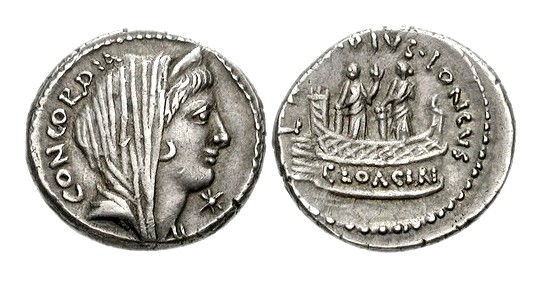
The goddess mentioned was the spirit of the Roman sewer system: perhaps a nymph that was transformed when her stream was enclosed to create it, or perhaps a Spirit of Artifice that sprang into existence as its cornerstone was laid. Her tiny shrine had two statues, and it is not clear what they represented: purity and filth, perhaps. I’d argue being on her good side is one of the ways of getting the, little used, Good Environment modifier, which means your character ages more slowly because of the healthy surroundings.
As a goddess of modest appeal: she’s going to pay a character sending her daily poems a lot more attention than, say, Lugh, who has a lot more going on in his life. A character with close ties to her could be a big fish in a small, however foul, pond. Has she a putrid Pope? An impeccable Nurse? What powers might such dedicated servants have? What sacred places might she maintain, in her dual aspect, as keeper of the clean from the unclean? There is clearly the scope for a Mystery Cult here.
We know little of the historical Cloacina, but she seems to have the following features. She is the enemy to plagues, and is a spirit of fecundity, tied somehow to Venus. She has a power over lost treasures. The Queen of the Sable Rivers commands, and is perhaps embodied by, the dark tunnels beneath the major cities, and is kind to those forced to shelter there. She is, in some sense, the most approachable of the Cthonic deities, and the most forebearing. Chesterfield, above, claims that characters gain a study bonus by reading in the chamber of necessity, but not on sciences, and therefore magic Arts, but only on more frivolous things, like Lores.
Cloacina is likely an enemy of Baal-peor, the demon prince who is an open gullet and a ceaseless defecation. Baal-peor flees women, as noted in a short story by Niccollo Machiavelli, so at least some of the Goddess of Filth and Purity’s enforcers will be of that gender. As an aside, she’s a formidable supporting character in Terry Pratchett’s Dodger, which I recommend.
Later addition
The one representation we have of the shrine of Cloacina indicates it had two figures upon it. They are both, apparently, Cloacina. I had thought I’d do faerie queen who was the protrectress of the discarded – the two faces being a Cthonic monster (the Queen of Sable Rivers) and a faerie godmother (The Keeper of the Lost). As I did a little extra research I wanted her to be a Genius Locus or Spirit of Artifice, then I discovered she was the goddess of literal sexual intercourse, as Venus of the Sewers. It’s hard to combine those two.
So…why combine? Let’s do something new. What if there are two figures because there are two figures? Imagine a faerie and a magical spirit, allied in symbiosis.
The faerie gains energy by being the literal goddess of orgasms. Her cult spreads wherever there are enough humans and enough wealth that leaving the faeces in the street is considered a bad idea. The artificial caverns of the body of the spirits of artifice are a realm for this dark queen. The grottoes are the initiation chambers of her priesthood, and her digestion chambers. Many faeries are parasites: but this one scavenges nearly everything we discard. If love is sacred, then every lost love is a sacrifice to the goddess of lost things.
This Cloacina is likely an enemy of Baal-peor, the demon prince who is an open gullet and a ceaseless defecation. Baal-peor flees women, as noted in a short story by Niccollo Machiavelli, so at least some of the Goddess of Filth and Purity’s enforcers are of that gender. Some of her finest servants have magical initiations or faerie servants.
The spirit of artifice finds the faerie useful as well. The idea of the goddess help spread the technology of the sewers. People say that you can tell magical spirits from faeries because the faeries care about humans, and the spirits don’t. Geniuses of Artifice are an exception though: if they want to breed, they need humans to make replicas. The sewers of Rome are ancient, now, but Cloacina’s daughters cradle Constantinople, and Paris and London, reaching up into the lives of the humans across the continent. Her children are marvellous, accidental, hidden labyrinths – marked, like tattoos, under the skin of the world. She has other children. Human children who are clever, and quick and almost magically skilled at making things go missing.
The Queen of Sable Rivers
A beautiful woman clad in dark, impeccably-clean furs. She wears genuinely antique jewellery. She is served by a priestesshood of nympholepts and swarms of vermin.
Faerie Might: 45 (Creo)
Characteristics: Int +3, Per +3, Pre +6, Com +3, Str 0, Sta n/a, Dex +1, Qik -1
Size: 0
Virtues and Flaws: Highly Cognizant, Humanoid faerie, External vis (minor) – the sewers, Focus Power – Mother of Vermin, 2 x Greater Faerie Powers, Highly cognizant, Immune to drowning, cold, piercing, 5 x Increased Might (major). Positive folktales, Wards forgotten – dislikes the Host, Faerie sight, Faerie speech, Lesser Faerie Powers,
Pretenses: She’s been watching humans forever and knows them intimately.
Reputations: Mythic Europe 1 (classicists)
Combat: She doesn’t see the point. If she wants every rat and bat in the sewer to eat you, they will. Swarms are terrible in Ars Magica, and she has more of them than anyone can count.
Soak: +3, but her body has a sort of watery quality that makes it immune to piercing weapons.
Wound Penalties: OK, 0, -1, -3, -5, Unconscious
Abilities: Craft (weaving) 12, Faerie Speech 6
Powers:
Blessing (Virtue): 5/10 points, Init 0, as per target (Grants virtues to favoured servants, up to, an including, the Drowned Man Initiation in Realms of Power: Magic)
Curse: (Flaw): 5/10 points, Init 0, as per target: Her curses tend to clean away filth, or skin, or muscles. Never by rot, though – she’s incredibly tidy.
Mother of Vermin: Duplicates any non-Ritual Creo, Intelligeo, Muto or Rego spell that affects the creatures of the sewer, for a cost of 1 Might point per magnitude.
Sight Beyond Sight: 3 points, Init -3, Aquam. Knows everything that happens in the sewers, and almost everything that happens to her servants.
Spirit Away: Variable points, n/a, Vim. She has a realm behind the world – she’s a Cthonic Queen and a variant of Venus. What’s going on in there is unclear, but some of her servants think they go there, and that it’s dark, pleasant and rather sybaritic.
Torrent From the Lungs: 3 points, Init -3, Aquam. 25. Literally drowns her enemies into ordure.
Equipment: All the festering stuff that falls into the sewers is hers.
Vis: 9, a lump of coal.
Appearance: Imagine Persephone, Goddess of Death, but assume she likes you. She is ithe most approachable of the Cthonic deities, and the most forebearing.
The Great Artefact
A vast coil of tubes and culverts, that can take a shadowy, humanoid shape to talk to those who hide within her body.
Magical Might: 45 (Terram)
Characteristics: Int +3, Per +0*, Pre 0, Com +3, Str +10, Sta +8, Dex 0, Qik 0
- There’s so much for her to notice that she misses things on the surface, but things that happen within her body are difficult to miss.
Size: +12 – Her body is ridiculously large.
Virtues/Flaws/Qualities and Inferiorities: Magic Thing, Ways of the Sewers, Greater Power (Crafter of Aquam) Greater Power (Engulf), No Fatigue.
Reputations: Mythic Europe 1 (classicists)
Combat: 15 x Crush: Init +8, Attack +40, Defense +8, Damage 55.
Soak: +15.
Wound Penalties: OK, 0, 0, 0, 0, 0, 0, 0, 0, 0, 0, 0, 0, 0, 0, 0, 0, 0, -1, -3, -5, Unconscious
Abilities: So many… and she acts as a teacher. She is able to teach virtues as a mystagogue. Troupes may wish to recycle the thief Virtues from Between Sand and Sea.
Powers:
Crafter of Water: 1-3 points, Init – 2 – Might costs, Duplicates Creo or Rego Aquam spells or level 45 or below, at the cost of 1 Might per magnitude.
Engulf: 0 points, Init – 2 After a successful attack, this Cloacina can engulf a foe smaller than her Size, necessitating deprivation rolls (ArM 5, p. 180-1). Each victim can, theoretically, Grapple free in future rounds, but she’s made of living stone and is the size of a city…
Equipment: Everything that’s landed in the sewers, ever. Imagine a huge museum or realia collection, layer upon layer of Roman history.
Vis: 9, Rego.
Appearance: The submerged shadow of a city, made of living stone, and served by the lost.
 Games From Folktales
Excellent idea. Purposeful rituals ought to have meaning, even if they are necessary functions.
LikeLike
Amazing idea! Thank you.
LikeLike
I’ve just had an added thought:
What if putting the Aenid down the loo is a Ward? Why would she hate that text so much? Is it that it mention the most powerful of the Cthonic Goddesses? I’m not familiar enough with the text to answer this right now…
LikeLike
If you’d prefer this in audio, it’s now on http://gamesfromfolktales.libsyn.com/podcast
LikeLike